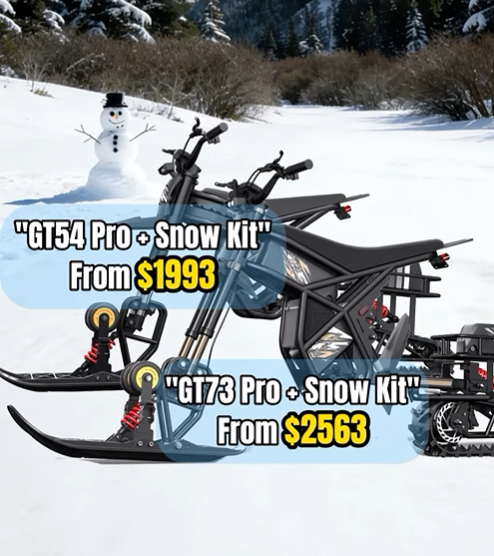
Every so often, we hear the same question from riders: Can I do a Controller Speed Upgrade Riding Times GT Pro to make my GT54 Pro or GT73 Pro faster? Before we talk about parts, performance, and compatibility, let’s get one thing straight right away:
👉 We strongly do NOT recommend upgrading the stock controller for speed. This action voids your warranty, and once you do it, we will not provide support—even if your original warranty hasn’t expired.
That might sound harsh, but it’s critical: modifying the controller alters core electrical and mechanical systems that your e-bike was engineered around. Any issues you have afterward—whether motor, battery, wiring, display, or related electronics—we cannot assist with.
Now, let’s dive into what riders ask about most: is it actually beneficial? What parts will you need? What are the consequences if other parts aren’t matched to the controller? And what are the risks?
What Is a Controller Speed Upgrade and Why Riders Consider It
Controller Speed Upgrade Riding Times GT Pro refers to swapping the stock controller in a GT54 Pro or GT73 Pro for a higher-rated unit in hopes of increasing top speed.
The stock configuration of the GT54 Pro and GT73 Pro includes a 60V/40A controller designed to balance power, range, and durability with the 60V battery and 3000W peak motor system.
Some riders think that upgrading just the controller will give them significantly higher mph numbers. But that assumption comes with several technical and safety challenges.
Why We Don’t Recommend Controller Modifications
Here are the top reasons:
❌ Voids Warranty
Changing the controller immediately voids your manufacturer's warranty—not just on the controller. On most e-bikes, the battery, motor, display, wiring, and electronic systems become unsupported once the electrical system has been altered.
❌ Risk of Electrical Stress
Your original system was engineered as a matched set. Increasing controller output can push more current and heat through the battery and motor than they were designed to handle. That can lead to overheating, failure, fire risk, or sudden shutdowns.
❌ Legal & Safety Issues
In many U.S. states, e-bikes are legally capped at certain power and speed limits (typically 750W continuous and 20–28 mph for assisted bikes). Exceeding those limits may change how your machine is classified and could require registration, helmets, and insurance.
When considering a controller swap or any Controller Speed Upgrade Riding Times GT series, it’s important to understand that altering your e-bike’s speed or power isn’t just a technical tweak—it can change how the law sees your bike entirely. According to eBikeRadar, modifying your e-bike’s speed limiter or boosting power can cause it to fall outside legal e-bike classifications in the U.S., which may lead to fines, reclassification as a moped or motorcycle, insurance complications, or even confiscation if ridden on public roads or trails.
Is There Any Actual Benefit?
Short answer: Not in the way most riders expect.
🔎 Top Speed vs Real-World Performance
Yes, a higher-rated controller might allow higher theoretical motor output, but top speed is not only defined by the controller. It’s limited by:
- Motor design and winding
- Battery voltage and discharge limits
- Aerodynamics and wheel size
- Controller firmware and safe cutoff parameters
Simply increasing controller amps doesn’t guarantee you’ll see mph gains if the rest of the system can’t safely support it.
🛠 Heat and Efficiency Issues
A more aggressive controller can push more current into the motor, which can generate excessive heat. Heat damages insulation and shortens motor life, potentially requiring an expensive motor rebuild or replacement.
⚡ Battery Degradation
Higher current draw reduces overall battery life, degrading capacity faster and shortening long-term ride range.
What Other Parts Need to Change If You Upgrade the Controller
If someone persists with Controller Speed Upgrade Riding Times GT Pro, you should also consider the following component checks or upgrades to support the added load:
🔋 Battery – Voltage and Amperage Compatibility
The controller and battery must match voltage. For the GT54 Pro and GT73 Pro, the stock system is 60V.
A higher-power controller might require either:
- A battery with a higher voltage
- A battery with higher continuous discharge (BMS) capabilities
If the battery cannot supply the current demanded by the controller, you can experience voltage sag, unexpected shutdowns, or even battery damage.
➡️ Consequence of not upgrading the battery:
Weak battery performance may cause the system to shut off due to controller or BMS damage.
⚙️ Motor – Heat and Current Handling
Your hub motor has a rated performance. If a new controller demands more amps than the motor is designed for, the motor windings and magnets heat up more rapidly—leading to early failure.
➡️ Consequence of mismatched motor:
Motor overheating, reduced lifespan, and potential motor burnout.
⚙️ Display and Electronics
Many e-bike displays communicate directly with the controller via specific wiring protocols. A new controller may not communicate properly with the stock display.
➡️ Consequence:
Display errors, missing speed/power/fault data, and reduced usability.
🔌 Connectors and Wiring Harness
A different controller could have a different wiring configuration. Connectors for the battery, motor phases, throttle, brake cut-offs, and the display can all be changed.
➡️ Consequence of mismatched wiring:
Short circuits, electrical failures, brake sensor errors, or control loss.
🛑 Sensors: Throttle, PAS & Brake Cut-offs
- The throttle voltage signal must match the controller
- Pedal Assist Sensor (PAS) must produce compatible signals
- Brake cut-off sensors must correspond
➡️ Consequence:
Controller not recognizing throttle or brake signals → unpredictable acceleration or failure to stop.
Safety Consequences If You Don’t Change Components
Let’s be clear: even if you could find a controller that fits a GT54 Pro or GT73 Pro frame, here’s what happens if you don’t update the rest of the system:
🔥 Overcurrent & Thermal Risk
A higher output controller that draws more amps than the battery or motor it is rated for can lead to overcurrent faults, system overheating, or fire hazards.
⚠️ Poor Handling and Braking
Your brakes and frame were engineered around the stock performance envelope. Higher speeds demand better brakes, suspension, and safety gear.
⚡ Controller & Motor Failure
Mismatches lead to erratic behavior, cutouts, and permanent damage.
🧩 Warranty & Support Loss
We will no longer help you with troubleshooting—even if your warranty period hasn’t expired.
A Safer Alternative: Tuned Settings & Rider Technique
Before thinking about hardware swaps, remember this:
📈 Maximize What’s Already Available
Your GT54 Pro and GT73 Pro already deliver high performance: up to ~40–49 mph top speed from the 3000W motor and 60V system.
Often, speed limitations are software/geofence-based and are tied to safety and legal compliance.
🧰 Regular Maintenance
Proper tire pressure, bearings, and drive alignments can improve real-world top speed by reducing rolling resistance.
Final Thoughts
We understand the enthusiasm behind a Controller Speed Upgrade, Riding Times GT Pro — riders want more speed and power. But speed upgrades come with real technical, safety, and legal risks that nearly always outweigh the benefits if done improperly.
⚠️ Important: Upgrading the controller alone without carefully addressing battery, motor, wiring, sensors, and display compatibility is likely to cause damage, safety hazards, and system failure.
If you still choose to pursue a controller swap, make sure you understand the electrical load, voltage matching, and connector configurations — and be prepared for the manufacturer to exclude your ride from warranty coverage.
Ride safe, ride smart, and enjoy every mile!